
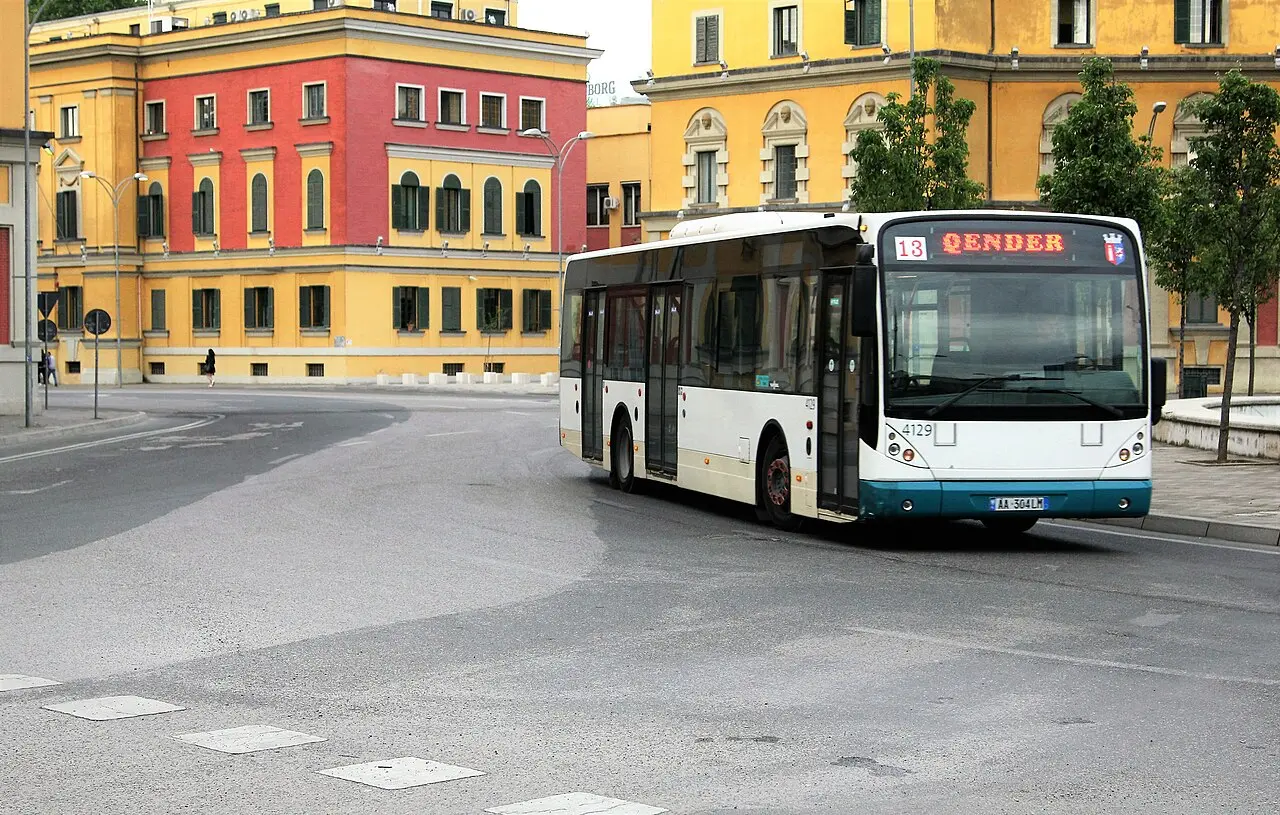
How the system actually works
Intercity travel uses full-size coaches, minibuses and furgons. A furgon is a minibus, not a separate ticket system. Routes between large towns are the simplest because demand is regular and the destination is unmistakable.
The official eTransport platform is now the national starting point for bus lines, stations and schedules. Practical details can still change, so confirm the selected operator, departure point, payment method and travel date close to departure.
Tickets, cash, luggage and seats
On many domestic routes, travellers buy from a terminal desk, an operator representative or the driver. Carry lek in small enough notes and do not assume an online listing creates a reservation. Where an operator offers direct online sales, use its own current page rather than a screenshot of a timetable.
Large coaches usually take luggage underneath. Smaller vehicles may use rear storage, the aisle or a roof rack. Keep documents, medicine, valuables and a layer for air conditioning with you. Arrive early when seat choice, luggage space or step-free access matters.
- Confirm whether the quoted fare is per person and where it is paid.
- Do not place passports or electronics in external luggage storage.
- Keep the address of your arrival accommodation offline.
- Allow daylight for an unfamiliar terminal-to-hotel transfer.
Tirana has different departure points
There is no useful concept of ‘the Tirana bus station’ for every journey. Domestic and international services can use different terminals or roadside points, and airport buses use the marked bus area at Tirana International Airport. The correct question is always: which terminal for this destination, on this date?
Do not navigate to a generic map pin without checking the operator or destination. Ask your Tirana accommodation to confirm the current point the day before, then leave margin for city traffic and finding the correct bay.
Easy corridors and awkward edges
The most workable no-car spine links Tirana with major towns such as Shkodër, Berat, Gjirokastër and Sarandë. The awkward journeys begin after the intercity leg: a quiet cove beyond Himarë, a village in the Vjosa valley, a dispersed Lake Ohrid stop or a mountain guesthouse with a seasonal transfer chain.
Solve the last leg before booking the room. A property outside a town can be excellent for a driver and a poor choice for someone arriving after dark with luggage.
| Origin → destination | Likely complexity | Main friction | Best verification |
|---|---|---|---|
| Tirana → Shkodër | Low | Correct Tirana terminal | Operator/terminal + accommodation |
| Tirana → Berat | Low–medium | Departure point and payment | Terminal + accommodation |
| Berat → Gjirokastër | Medium | Frequency and through-service | Ask locally the day before |
| Gjirokastër → Sarandë | Low–medium | Season and departure point | Operator/local confirmation |
| Sarandë → Himarë | Medium | Seasonal pattern and roadside stops | Local operator/accommodation |
| Shkodër → Theth | Medium–high | Seasonal transfer and weather | Current transfer provider/guesthouse |
| Tirana → rural Përmet stay | High | Last-mile transport | Host + agreed transfer |
Airport, ferry and rail reality
Tirana airport is reached by road. Use the airport’s own transport pages for current buses and the official taxi information rather than accepting an unsolicited offer. Sarandë is the main Albanian arrival point for ferries from Corfu; pair an international ferry with a generous onward buffer and check the operator’s live conditions.
Albania does not offer a visitor rail network that can replace the bus plan. If a map app proposes a train-like solution, verify it before building the day around it.
When to pay for a transfer or tour
A shared or private transfer is worth considering when it protects a fixed departure, reaches a rural stay, bridges a coast segment with poor local links or completes a mountain chain sold as one coordinated service. A tour makes more sense when access, interpretation or safety is part of the value.
Ask for the total price, pickup point, vehicle, luggage policy and cancellation terms in writing. Skip the upgrade on a straightforward major-town corridor when daylight and a flexible arrival make the bus perfectly adequate.
Accessibility and missed connections
Step heights, rough terminal surfaces, narrow aisles and inconsistent assistance can make the network difficult for travellers with reduced mobility. Confirm the exact vehicle and boarding arrangement directly; an online ticket is not evidence of level access.
If a connection fails, protect the fixed item first: accommodation reception, ferry or flight. Ask locally for the next major-town service and avoid improvising a remote arrival after dark. Travel insurance should cover the actual itinerary, not merely the country name.
Use current data without turning it into a permanent timetable
eTransport is now the official national starting point for lines, stations and schedules. Use it to identify the route and operator, then verify the selected service close to travel. The editorial page deliberately does not copy an entire timetable because a copied departure becomes unsafe advice as soon as an operator, station or season changes.
Record a verification note with the date, operator, departure point and arrival point. That is more useful than writing ‘bus at 09:00’ in the itinerary. If an accommodation host confirms a different local practice, ask for the exact map pin and operator name so the change can be checked rather than accepted as a vague correction.
Checked against: eTransport Albania
Airport buses are the clearest published example
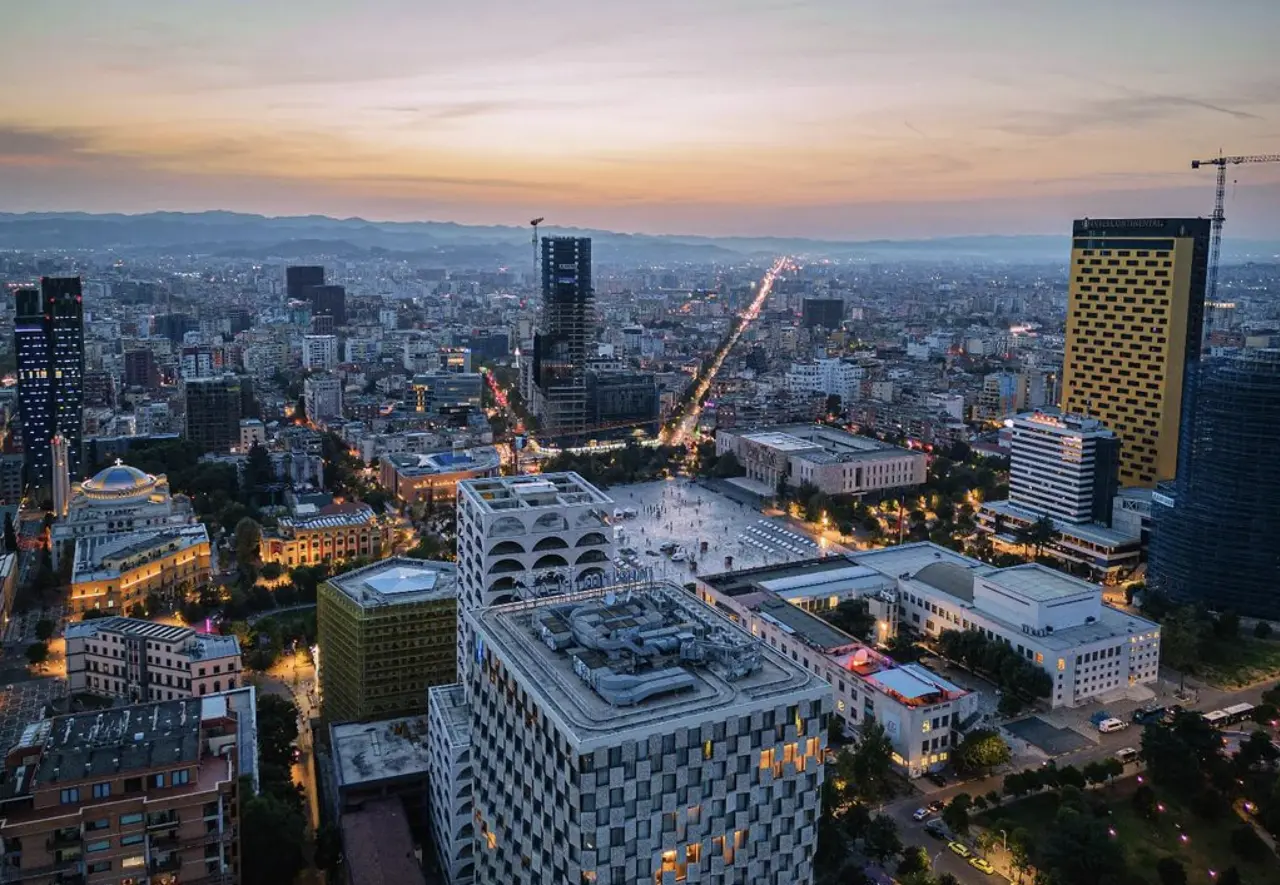
Tirana International Airport publishes more specific information than many domestic routes. When checked on 17 September 2026, the airport listed LU-NA’s central Tirana service as hourly and 24/7, with a 30–40 minute journey and a fare of 400 ALL / €4. It placed the Tirana stop behind the Palace of Opera and Ballet. The airport also listed an hourly South and North Bus Terminal service from 07:00 to 18:00, with a 20–30 minute journey and a fare of 300 ALL / €3.
Those details help only after the traveller chooses the correct destination. The centre bus is useful for a central first night; the terminal bus is useful when making an intercity connection, provided the onward service and buffer are confirmed. The airport identifies its bus area beside P1. Recheck all times, fares and operators on the official page before the flight.
| Published link | Service pattern | Published journey | Published fare | Best use |
|---|---|---|---|---|
| Airport ↔ central Tirana | Hourly, 24/7 | 30–40 minutes | 400 ALL / €4 | Central first or final night |
| Airport ↔ South and North Bus Terminal | Hourly, 07:00–18:00 | 20–30 minutes | 300 ALL / €3 | Confirmed onward intercity connection |
Checked against: Tirana International Airport — by bus, Tirana International Airport — bus terminal
When a no-car plan stops being resilient
A route becomes fragile when it depends on the last service of the day, an unverified roadside pickup, a mountain or boat handover and a fixed booking after arrival. Remove one dependency. Travel earlier, add a night at the hub, choose a better-connected base or arrange the single weak transfer.
Rail should not be used as the backbone of a first-time itinerary unless the exact passenger service is independently confirmed for the date. Ferries are separate international or lake operations with their own ports, seasonal patterns and check-in rules. Airports have their own published transport pages. Calling all three ‘public transport’ hides the fact that each needs a separate source and buffer.
Checked against: eTransport Albania, Tirana International Airport — by bus, UK FCDO — safety and security in Albania